
Silver dropped 2.3% last week after a significant 16% climb in August. When prices pull back,...
With gold and silver cooling off after reaching all-time highs at the beginning of 2026, what role should they play in your portfolio, if any?
Approach the gold vs silver investment question by starting with your purpose for owning metals.
Gold can serve as a foundation for wealth preservation, while silver adds exposure to industrial demand and a more volatile price cycle. Understanding what each metal can do and where its limits lie gives you a stronger basis for deciding how to own it.
So, while inflation, currency risk, and market selloffs may threaten your purchasing power in different ways, a precious metals strategy should account for those differences.
What Role Does Gold Play in Your Portfolio?
Gold's primary role in a precious metals strategy is wealth insurance: a tangible store of value that can help diversify exposure to currencies and conventional investments.
Gold’s negative correlation to the stock market and paper currency has benefited gold investors for a long time. The spot price of gold has historically risen when the U.S. dollar weakened and when the stock market faltered. Investors have seen gold prices soar and the stock market plunge during periods of high inflation. In addition to financial insecurity, gold is also known as a crisis commodity for its ability to maintain or even grow in value during times of geopolitical uncertainty.
The World Gold Council's 2026 research distinguishes gold's historically more defensive behavior from silver's greater sensitivity to industrial cycles. Gold's broader demand base and deeper market help explain that difference.
Gold prices remain exposed to interest rates, currency movements, and selling pressure in the short-term. Heightened uncertainty can attract buyers, but gold does not rise during every crisis. Own it for a defined long-term purpose (wealth insurance) rather than a prediction about tomorrow's headlines.
What Role Does Silver Play in Your Portfolio?
Silver complements gold by combining monetary demand with substantial industrial uses. Electronics, solar applications, and other technologies connect its investment case to activity beyond the financial markets.
Those uses create opportunity and risk. Strong industrial demand can support the market, while economic slowdowns can weaken it. Silver's smaller market also contributes to larger price swings, which can magnify gains and losses.
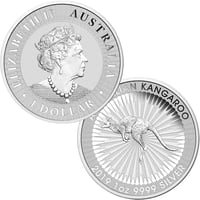
A lower price per ounce also makes silver bullion products such as Silver American Eagles more accessible than gold for investors. This gives investors an opportunity to own precious metals at a lower cost as they start to accumulate ounces. Once you own enough ounces of silver, this could be flipped into an ounce of gold, typically at a lower premium than trying to purchase fractional gold and accumulate that way.
Why Hold Both Gold and Silver?
Holding both metals can combine gold's more defensive characteristics with silver's distinct industrial exposure and appreciation potential. They can complement each other, and offer further diversification in a portfolio when owned in tandem.
The Gold-Silver Ratio offers another way to assess their relationship. Divide gold's price per ounce by silver's price per ounce to see how many silver ounces equal one gold ounce.
A rising ratio means gold is becoming more expensive relative to silver; a falling ratio means the reverse. The ratio can be used as a meter for overall precious metals bullishness versus bearishness. It also provides context for the relative value of each metal and can indicate market opportunities when one is undervalued versus the other.
Use that information alongside your objectives and transaction costs. Rebalancing should serve your strategy rather than turn long-term wealth preservation into constant trading.
How Much Gold and Silver Should You Hold?
Your allocation should follow your objectives, time horizon, liquidity needs, and risk tolerance. There is no universal percentage or gold-to-silver split that fits every portfolio.
If wealth preservation is your priority, consider gold as the foundation of your metals holdings. A silver position can add exposure to different demand drivers if you can accept sharper fluctuations. Review the combined allocation against your other investments and foreseeable spending needs.
World Gold Council surveys indicate that a gold allocation of 8-12% offers the ideal mix of protection against the volatility of other assets. These should be considered part of your core holdings, and remain untouched in your portfolio. Economic and political uncertainty is a given, so you absolutely cannot risk giving up your core position.
Once you’ve filled this quota, any additional funds you allocate towards precious metals typically are purchased for profit potential. Silver fills this role well. But gold has also performed extremely well so far in this ongoing bull market.

Build a Precious Metals Strategy With Purpose
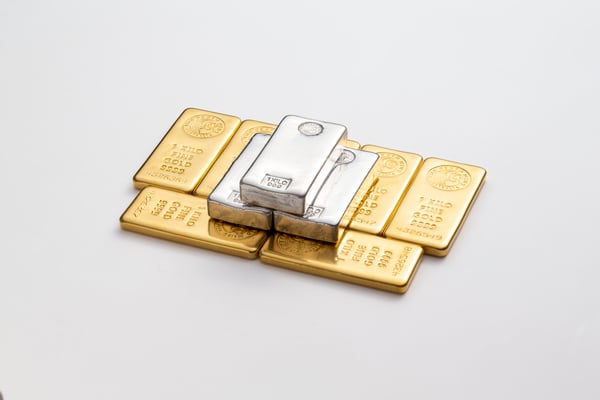
A purposeful strategy gives gold and silver distinct jobs within your broader portfolio. Gold can anchor your wealth-preservation allocation. Silver can complement it when its industrial exposure and price swings fit your objectives.
Start with the risks you want to address, then choose your products, ownership structure, and storage. Revisit the plan as your circumstances change, rather than rebuilding it around each market headline.
Call Asset Strategies International at 800-831-0007 to discuss precious metals and storage choices. Let us help you take practical steps to Keep What's Yours with physical gold and silver.